
STADIO: The Future of The Business of Education
The global EdTech sector has experienced significant turbulence in recent years, with several high-profile platforms collapsing under the pressure of scale, cost, and complexity. At the same time, demand for accessible, high-quality tertiary education continues to rise, particularly in markets like South Africa, where education remains both a social imperative and a commercial challenge.
This poses a difficult but important question: how do you balance academic excellence with commercial viability when scaling education systems?
In this conversation, Kia Jacklin sits down with Dr Stan du Plessis, CEO of JSE-listed education group STADIO Holdings, to unpack the operational and strategic realities behind modern higher education.
About the guest
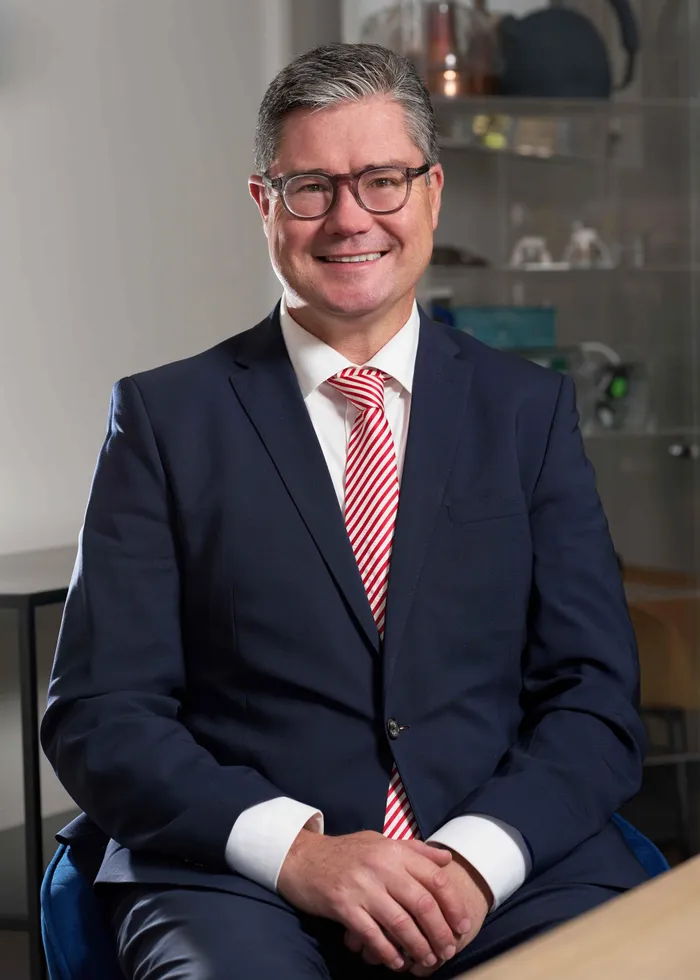
Dr Stan du Plessis is the Chief Executive Officer of STADIO Holdings, one of South Africa’s leading private higher education groups listed on the JSE. With nearly three decades of experience spanning both public academia and private education, he brings a rare dual perspective, combining academic depth with commercial leadership.
His role places him at the centre of one of the most complex challenges in education today: building a scalable, financially sustainable education model without compromising academic quality.
In this conversation, he offers insight into how STADIO approaches this balance, and what it takes to run a listed education business in an environment where both outcomes and accessibility matter deeply.
Why this conversation matters
Higher education is undergoing a structural shift. Traditional models are being tested by rising costs, increasing demand, and the rapid evolution of digital learning platforms. While EdTech was once positioned as the solution to scalability, recent failures across the global sector have highlighted that technology alone is not enough.
What matters more is design — how institutions structure delivery, maintain academic standards, and ensure long-term sustainability while still expanding access.
In South Africa, this tension is even more pronounced. The need for accessible tertiary education continues to grow, but so does the pressure on institutions to remain commercially viable and academically credible at the same time.
STADIO operates directly within this tension as a listed private education provider. Its model reflects a broader shift in how education is delivered — moving toward a “digital-by-design” approach that integrates technology, operations, and academic delivery from the ground up.
In this episode
This episode explores the realities behind scaling education in a changing world.
It examines why parts of the global EdTech market struggled to sustain themselves, what lessons can be learned from those failures, and how institutions like STADIO are thinking differently about structure, delivery, and growth.
It also goes deeper into the operational side of education — the part that is rarely visible but critically important. From managing a listed education asset to balancing shareholder expectations with student outcomes, the conversation highlights the complexity behind decisions that shape thousands of student journeys.
At its core, this is a conversation about alignment — between purpose and performance, access and sustainability, innovation and execution.
Watch the full episode to hear Dr Stan du Plessis, in conversation with Kia Jacklin, unpack the business of higher education and what it really takes to scale education in a digital-first world.

About STADIO
STADIO Holdings is a JSE-listed private higher education group offering a range of accredited qualifications across multiple disciplines.
The organisation operates with a focus on expanding access to tertiary education while maintaining academic quality and financial sustainability. Its model reflects a growing shift in the sector toward integrated, digitally enabled education delivery systems that are designed to scale responsibly.
In the context of this episode, STADIO represents a real-world example of how modern education institutions are navigating the intersection of commercial pressure, academic responsibility, and technological change.