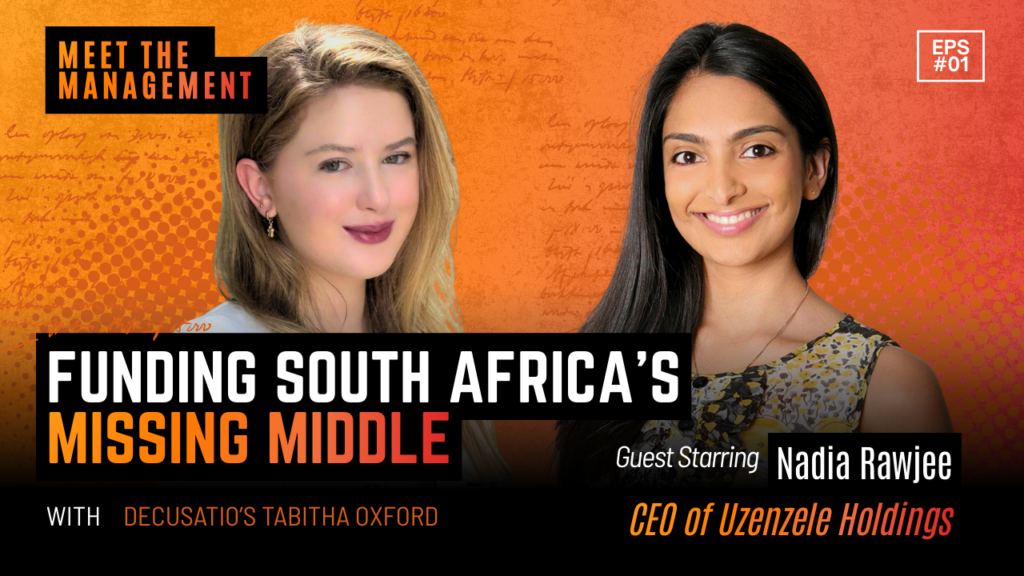
Closing the SME Funding Gap with Bridgement
South Africa’s SME sector contributes roughly 40 percent of GDP and employs around 60 percent of the workforce. Yet an estimated R386 billion financing gap persists, largely because traditional lenders still rely on audited financial statements, tangible collateral and predictable cash flows — conditions that many growing businesses simply cannot meet. A new generation of fintech lenders is building infrastructure to close that gap, and the conversation around whether they’re doing it fairly is long overdue.
In this episode of Meet the Management, Marc Ashton sits down with Daniel Goldberg, co-founder and CEO of Bridgement, to unpack how alternative lending actually works, why non-bank credit looks the way it does, and what entrepreneurs need to do to put themselves in the best possible position to access growth capital.
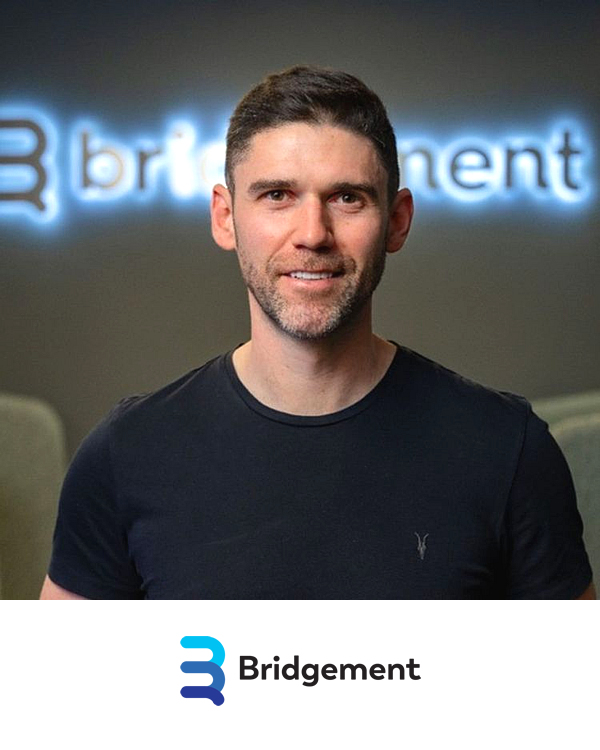
About the guest
Daniel Goldberg is the co-founder and CEO of Bridgement, which he has built since 2016 into one of South Africa’s most recognised fintech lenders, having deployed more than R2 billion in funding to South African SMEs. A qualified electrical and biomedical engineer from the University of the Witwatersrand, Daniel came to fintech through a career that spanned Bain & Company, Rand Merchant Bank, DocFox and Gigster before co-founding Bridgement with a team of data scientists and engineers who shared a conviction that business lending could be done better with the right technology.
Beyond Bridgement, he serves as Board Member and Chairman of the South African SME Finance Association (SASFA), the industry body for non-bank SME lenders, which gives him a perspective on the funding gap that goes beyond his own business. In July 2026, Bridgement announced a R330 million raise from RMB and Standard Bank, validating both the model and the market opportunity — and making this one of the most timely conversations about fintech lending in South Africa right now.
Why this conversation matters
The debate about whether non-bank lending in South Africa is too expensive tends to generate more heat than light. Critics point to rates that look high compared to prime-linked bank credit; proponents argue the comparison is misleading because the risk profile, speed and flexibility are fundamentally different. What’s often missing from that debate is someone who can explain the mechanics clearly and without spin — and that’s a big part of what this episode delivers.
Access to capital also isn’t purely a pricing problem. Many SMEs that could qualify for funding simply don’t know how lenders assess them, what financial habits signal creditworthiness, and why a business that looks healthy on paper can still be turned down. The gap between what entrepreneurs think they need to do to become fundable and what lenders are actually looking for is real, and it costs businesses growth time they can’t get back.
The broader structural issue is also worth naming. South Africa’s traditional banking system was built around credit models designed for larger, more established businesses. Non-bank lenders like Bridgement aren’t just offering a faster version of the same thing — they’re using live bank data, accounting integrations and AI-driven credit models to make decisions about businesses that the existing system was never designed to serve. Understanding how that infrastructure works, and where it still falls short, matters for anyone thinking seriously about the future of the South African economy.
In this episode
This is a candid conversation about the funding gap, what’s closing it, and what it costs. It covers:
- what led Daniel to co-found Bridgement and the problem he set out to solve
- how non-bank lenders are filling a multi-billion Rand SME financing shortfall that traditional banks have consistently failed to address
- the honest answer to whether non-bank funding rates in South Africa are fair relative to the risk lenders take on
- how Bridgement uses live financial data and AI to make credit decisions faster than conventional lenders
- the trigger points that push a business to explore alternative funding: growth, cash flow, expansion, or distress
- the practical financial habits and preparation steps that improve an entrepreneur’s chances of being approved
Watch the full episode to hear Daniel Goldberg deliver a clear-eyed account of how alternative lending actually works in South Africa, what fair credit looks like in a high-risk environment, and what every business owner should know before they apply for funding.
About Bridgement
Bridgement was founded in 2016 by a team of data scientists and engineers with a single objective: to give South African SMEs access to working capital without the paperwork, weeks of waiting and collateral requirements that make traditional bank funding inaccessible to so many growing businesses. The platform offers a fully online, paperless application that takes around two minutes to complete, with credit decisions typically delivered within 24 hours and funding of up to R5 million available to qualifying businesses. To be eligible, a business needs to be registered in South Africa, have been trading for at least six months, and generate an annual turnover of R500,000 or more.
What distinguishes Bridgement technically is its use of live financial data — drawn from applicants’ bank accounts and accounting software including Xero and Sage — to build a real-time picture of business performance rather than relying on historical documents alone. The platform analyses thousands of financial and operational data points to generate credit decisions, which allows it to serve businesses that fall outside the traditional lending model without taking on disproportionate risk. Since launching, Bridgement has originated more than R2 billion in financing for South African SMEs, and in July 2026 secured a R330 million funding raise from Rand Merchant Bank and Standard Bank to expand its loan book further. The company is also developing its AI-powered credit infrastructure for licensing to banks and other financial institutions, a move that signals Bridgement’s ambitions beyond direct lending.